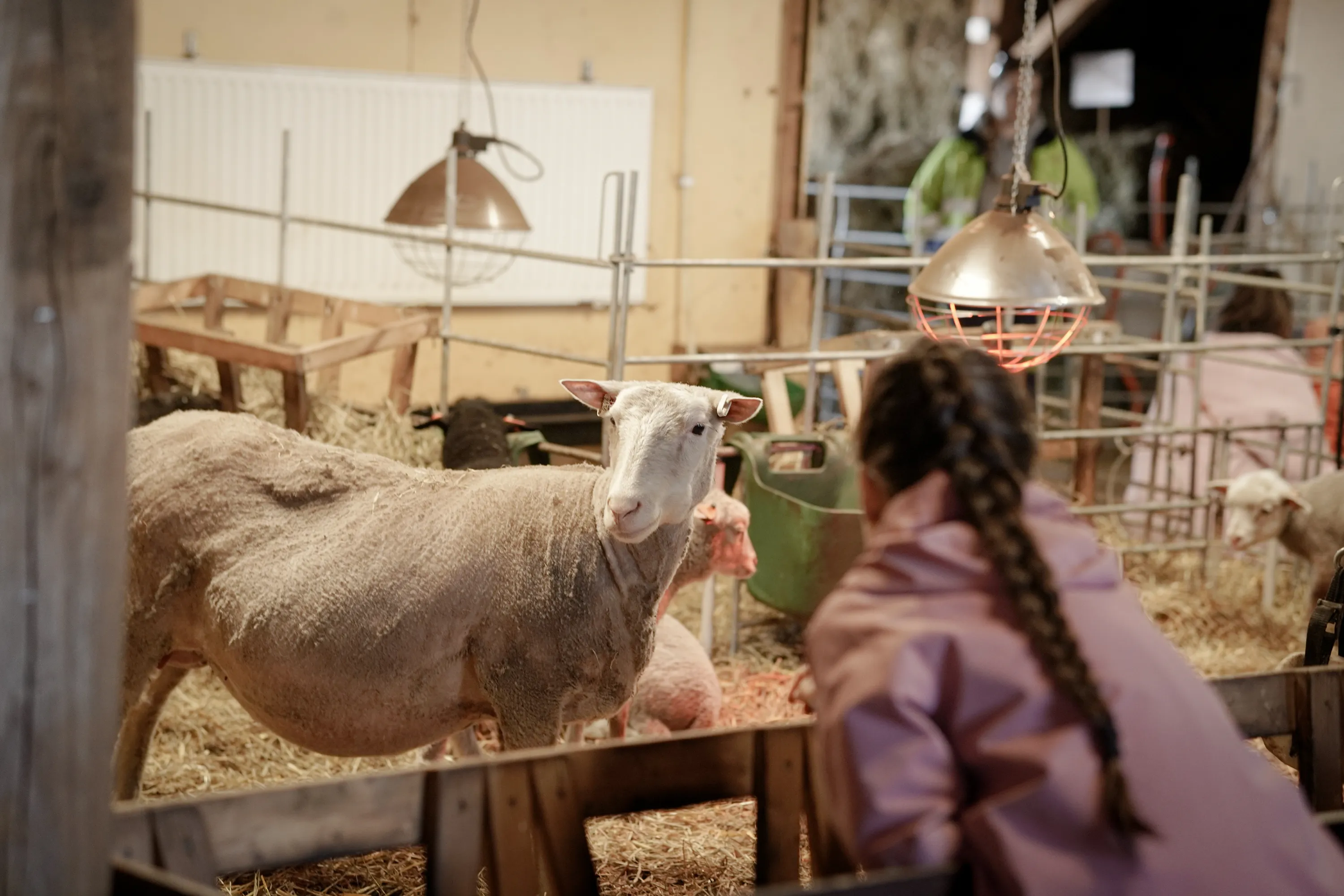
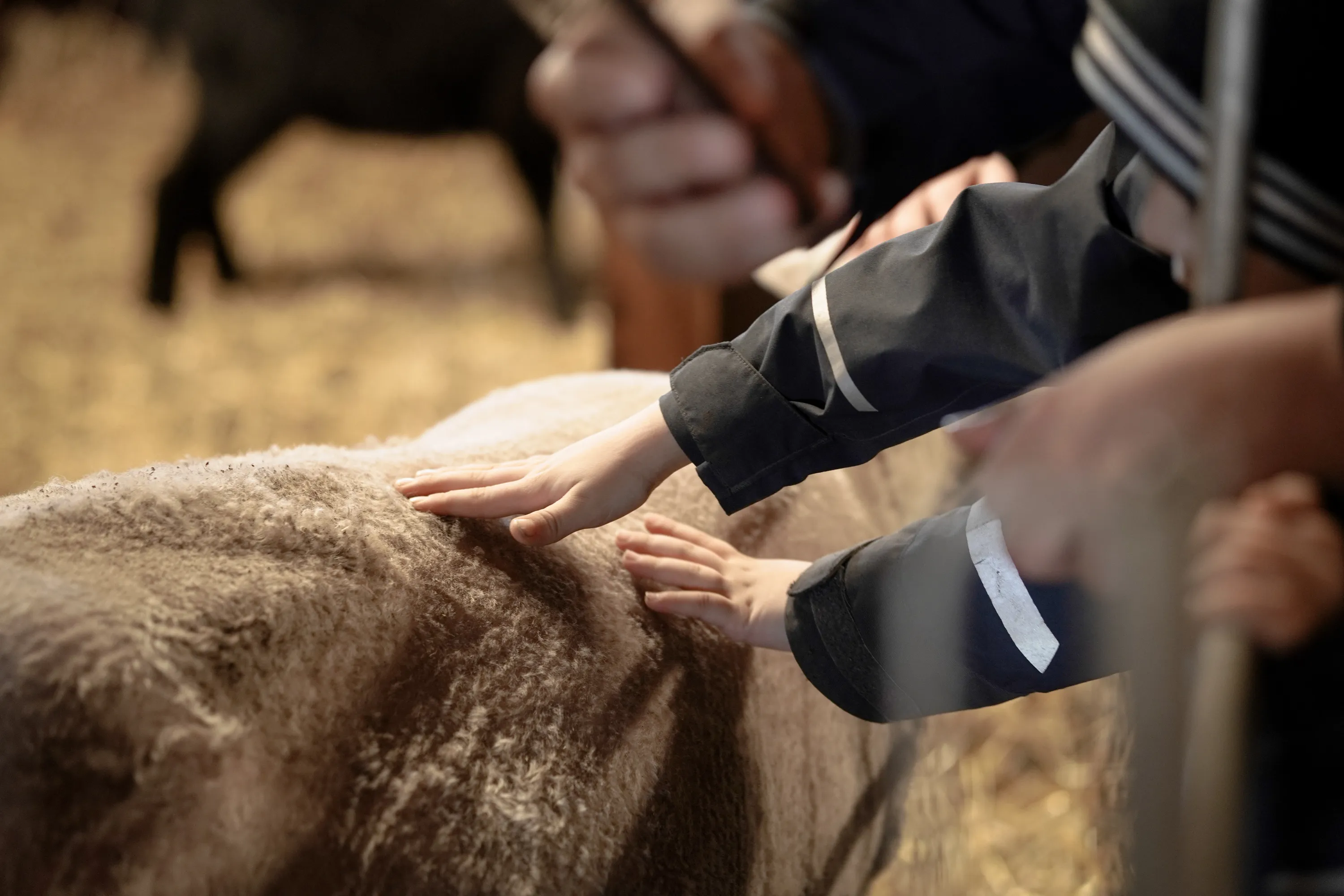
The Haltiala petting zoo offers an excellent way to spend time in a peaceful countryside setting within the capital region. At the petting zoo, you can admire sheep, cows, pigs, chickens, alpacas, horses, goats, and ponies. The petting zoo is completely free of charge for all visitors.
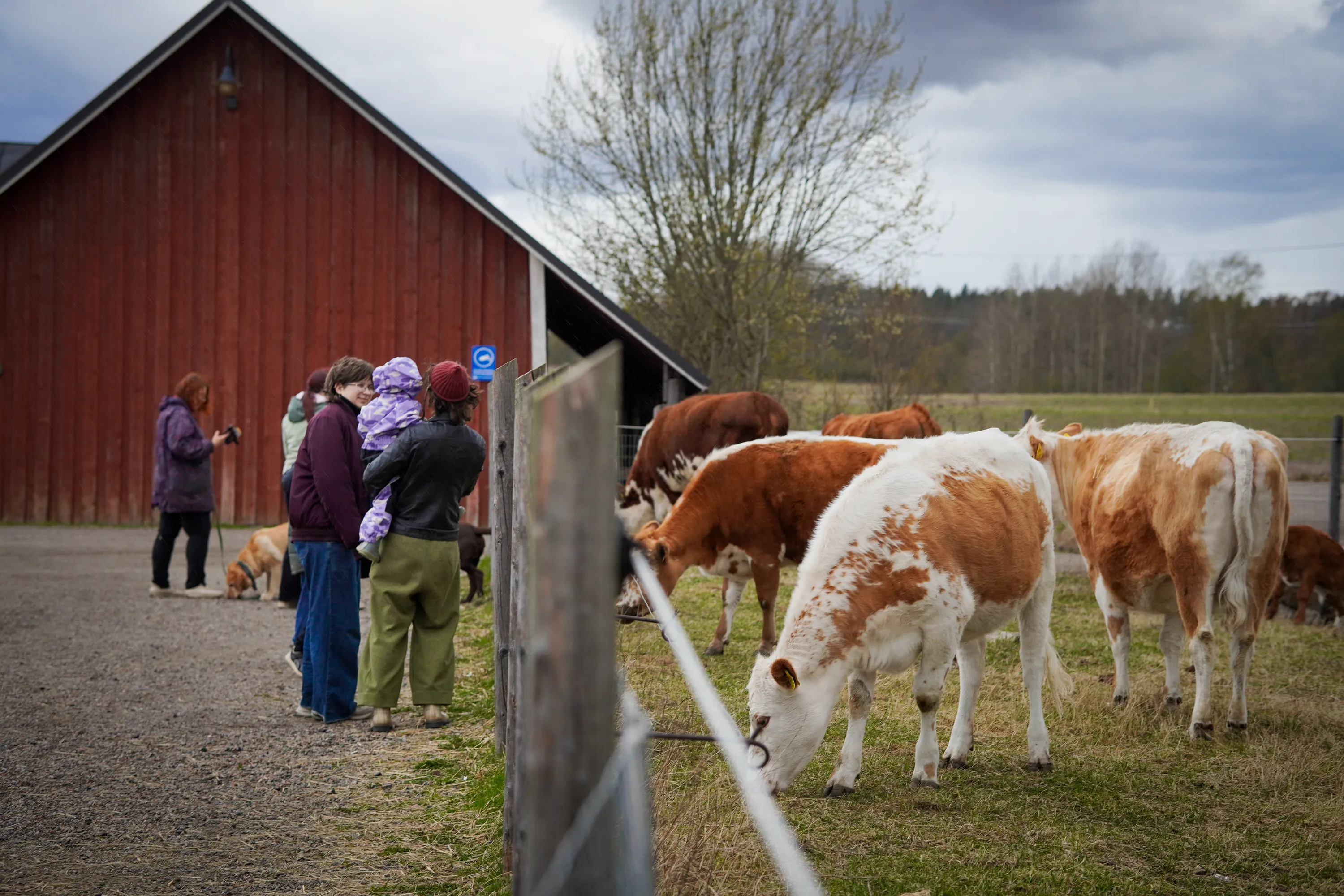
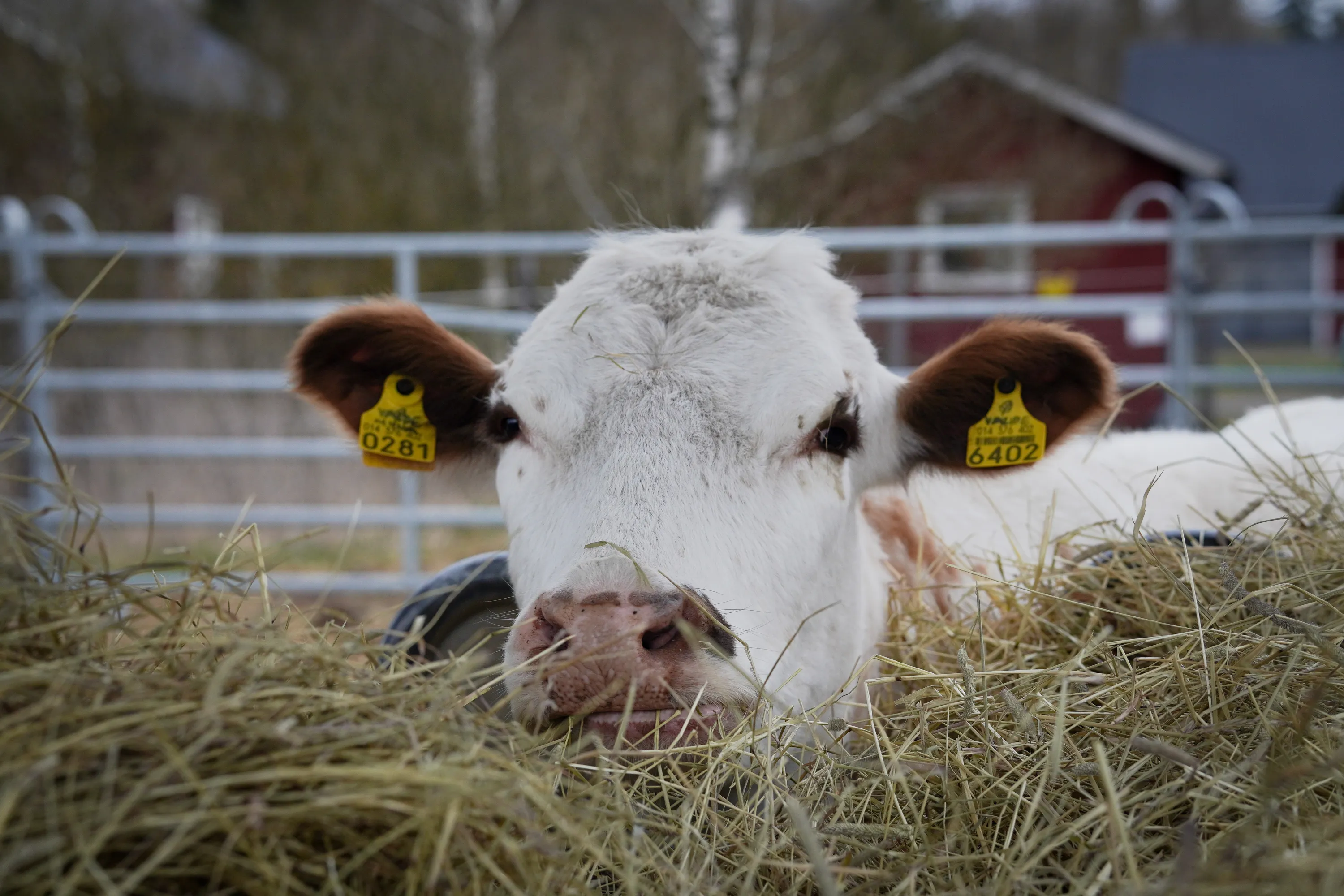
All the cows at Haltiala Farm are suckler cows. A suckler cow is a cow that raises its own calf, meaning its milk is not milked for human consumption. Suckler cow breeds are traditionally bred for beef production. At Haltiala, the number of suckler cows is small, so only a few calves are born each year. The cows' main role is to manage the environment at Haltiala Farm through grazing, which helps maintain the biodiversity of the area.
Most of the cows at Haltiala belong to the Eastern Finncattle breed. Due to their brindled coloring, the breed is also known as "kyyttö". Eastern Finncattle are renowned for their health, resilience, and longevity. In character, the breed is curious, inventive, and social, but also spirited and independent when needed. The breed was threatened with extinction in the 1980s and remains endangered today.
Visitors can also see Hereford suckler cows at the farm. The Hereford is easily distinguished from Finncattle by its large size.
Cow (Lehmä) = an adult female bovine
Bull (Sonni) = a male bovine
Ox / Steer (Härkä) = a castrated male bovine
Heifer (Hieho) = a young female bovine that has not yet calved
First-calf heifer (Ensikko) = a cow that has calved for the first time
Calf (Vasikka) = a bovine under 8 months of age
Cattle / Herd (Karja) = all the bovines on the farm
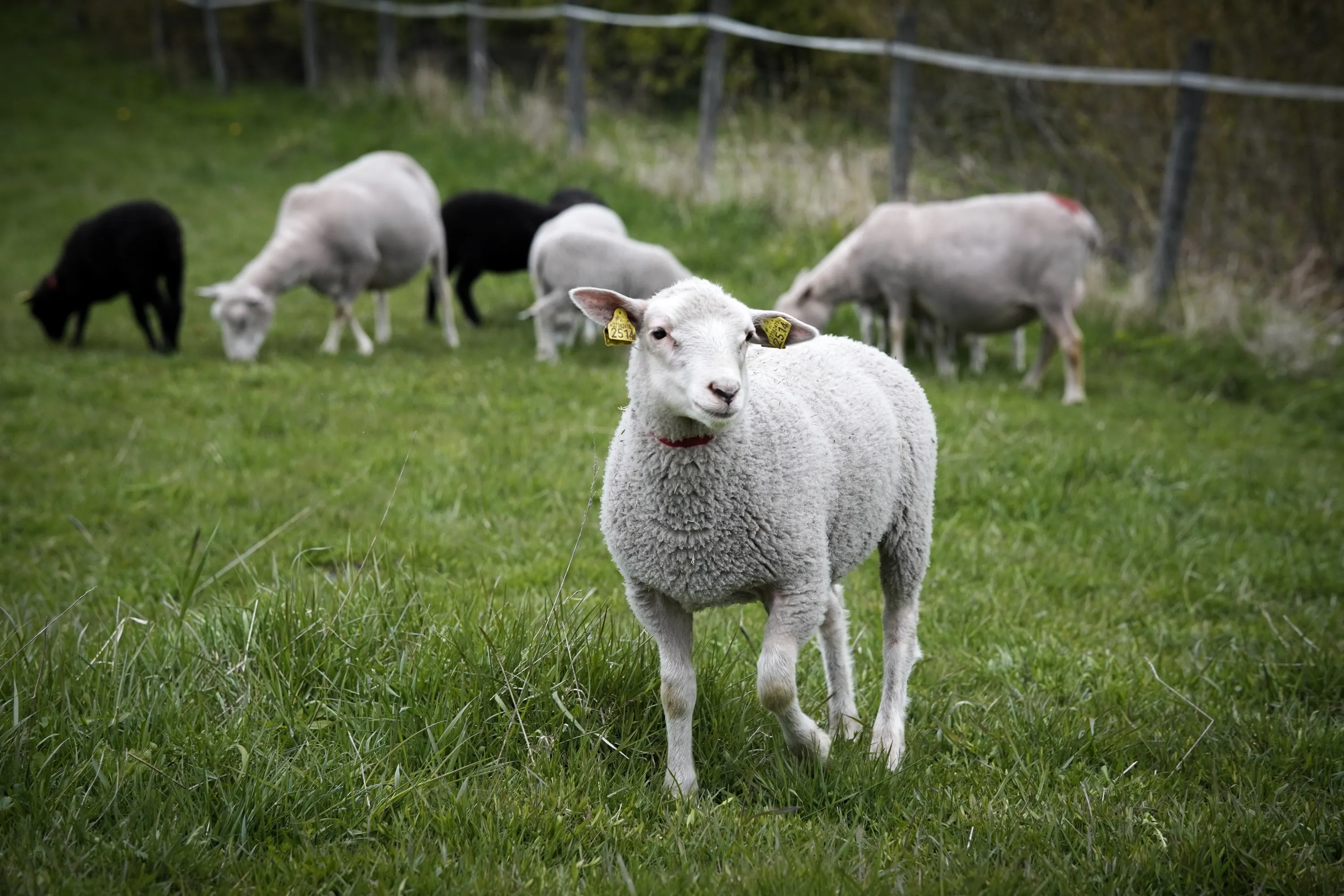
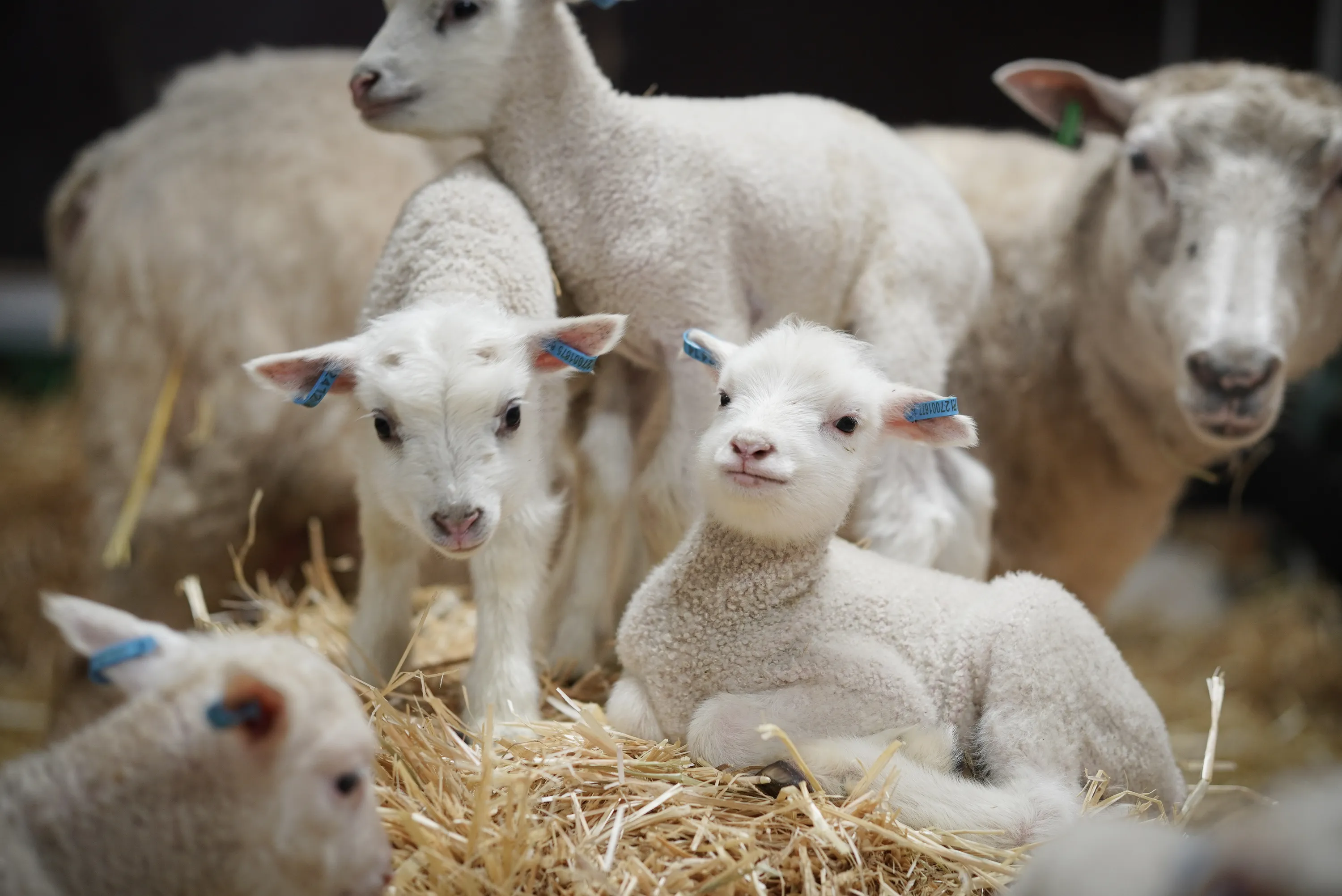
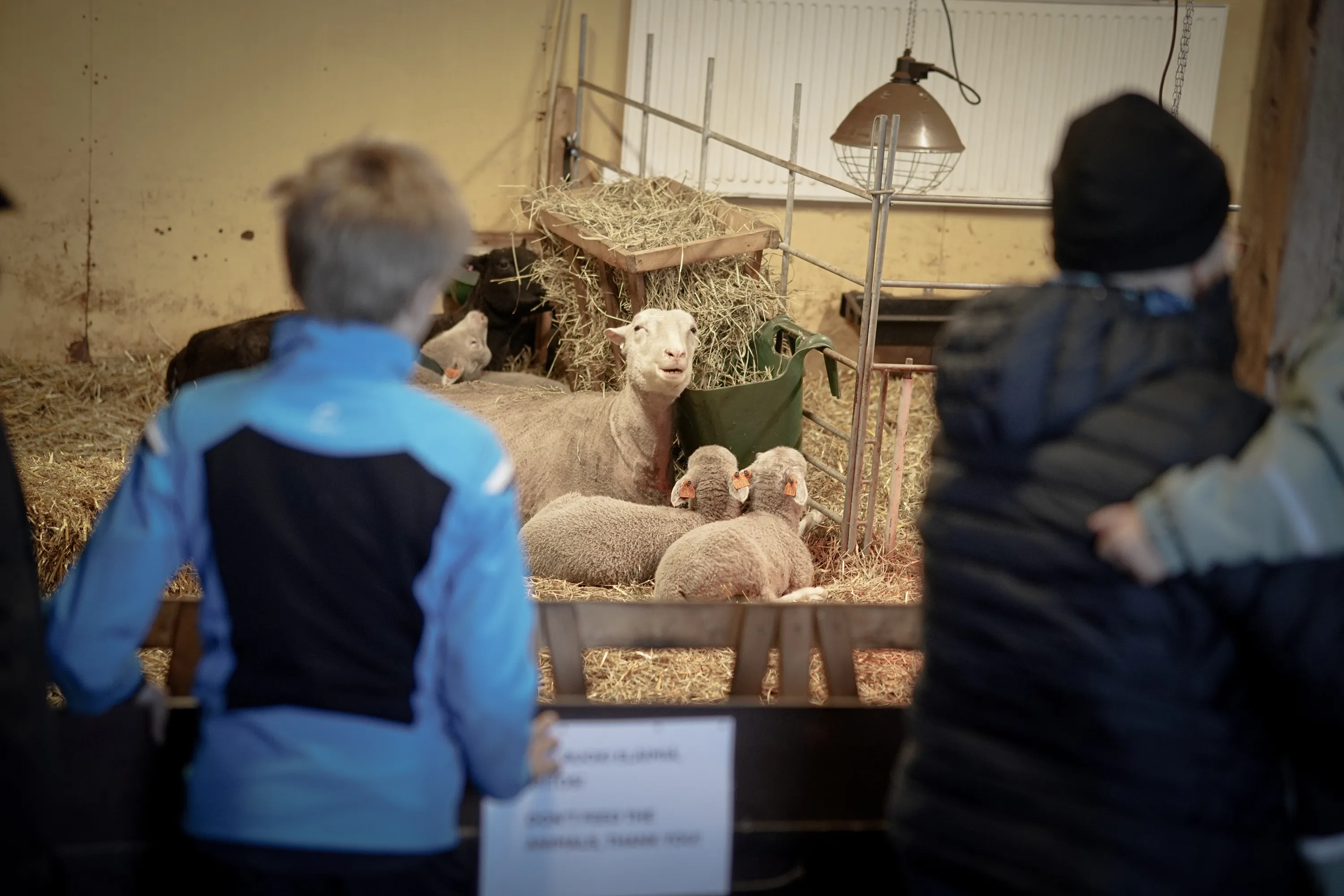
The farm's sheep spend the winter and spring seasons indoors, but during the summer, you can see them outside in the pastures. Visitors can visit the sheep barn independently from around Independence Day (early December) until Epiphany (early January), as well as in the spring when the lambs are born in April and May.
The sheep at Haltiala Farm are Finnsheep. Finnsheep are most commonly white, but black, brown, and grey colorings also occur. Finnsheep wool is exceptionally soft, elastic, and lustrous, making it a highly valued raw material for artisans. At Haltiala, the sheep are shorn twice a year.
In the summer, the sheep graze and maintain Haltiala’s traditional heritage landscape. They can be spotted both along the river and across the vast fields. Grazing animals significantly increase local biodiversity.
In the spring, new lambs are born at the farm. Finnsheep is one of the most prolific sheep breeds in the world; a single ewe most commonly gives birth to 3–4 lambs, but even larger litters are not uncommon.
The preservation and development of the Finnsheep breed is the most vital objective of Finnish sheep breeding.
Ewe (Uuhi) = a female sheep
Ram (Pässi) = a male sheep
Wether (Oinas) = a castrated male sheep
Barren / Dry ewe (Joutilas) = a ewe that is neither pregnant nor nursing
Lamb (Karitsa) = a sheep under 12 months of age
Litter (Vuonue) = a group of lambs born from one birth
Flock (Katras) = a group of sheep
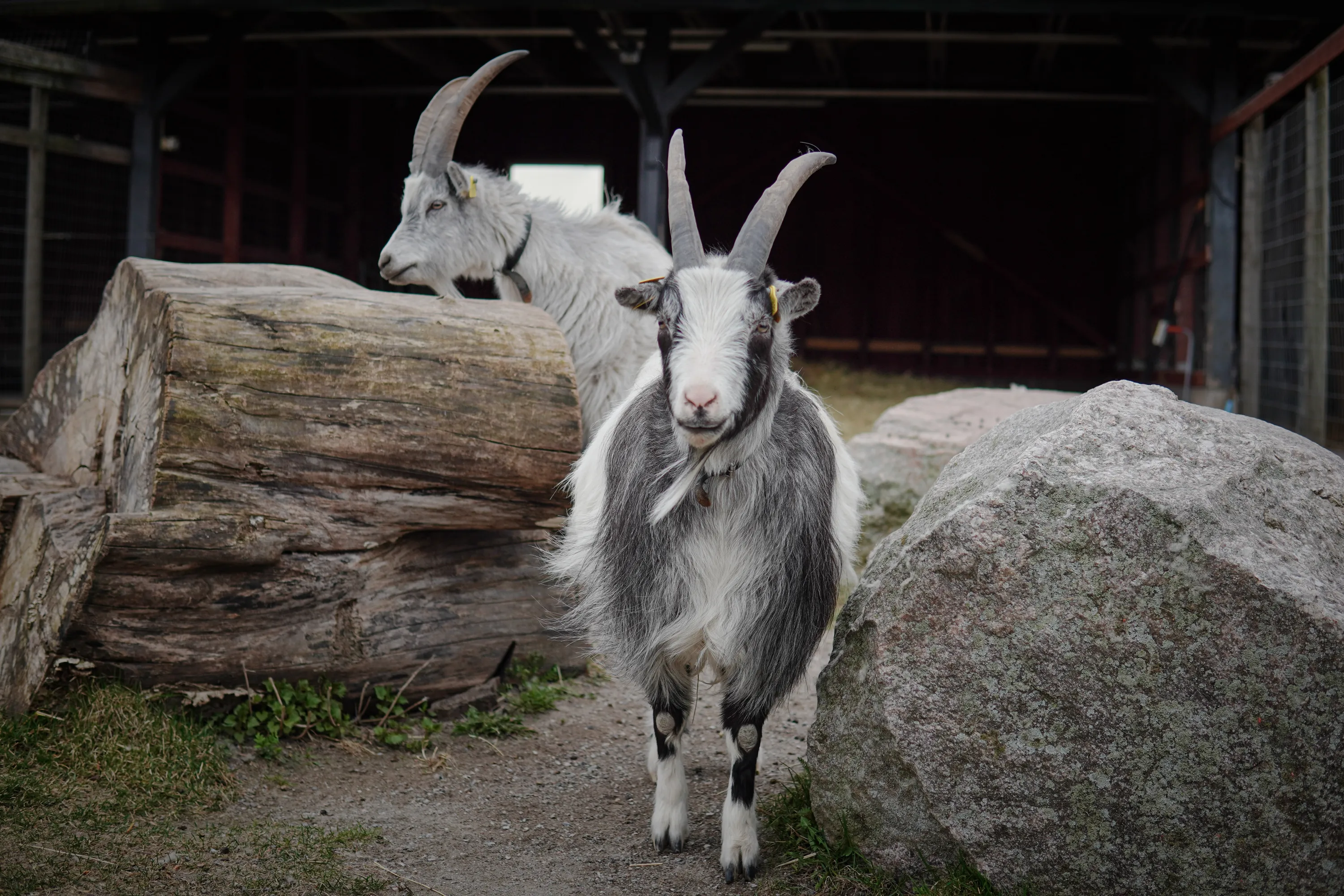
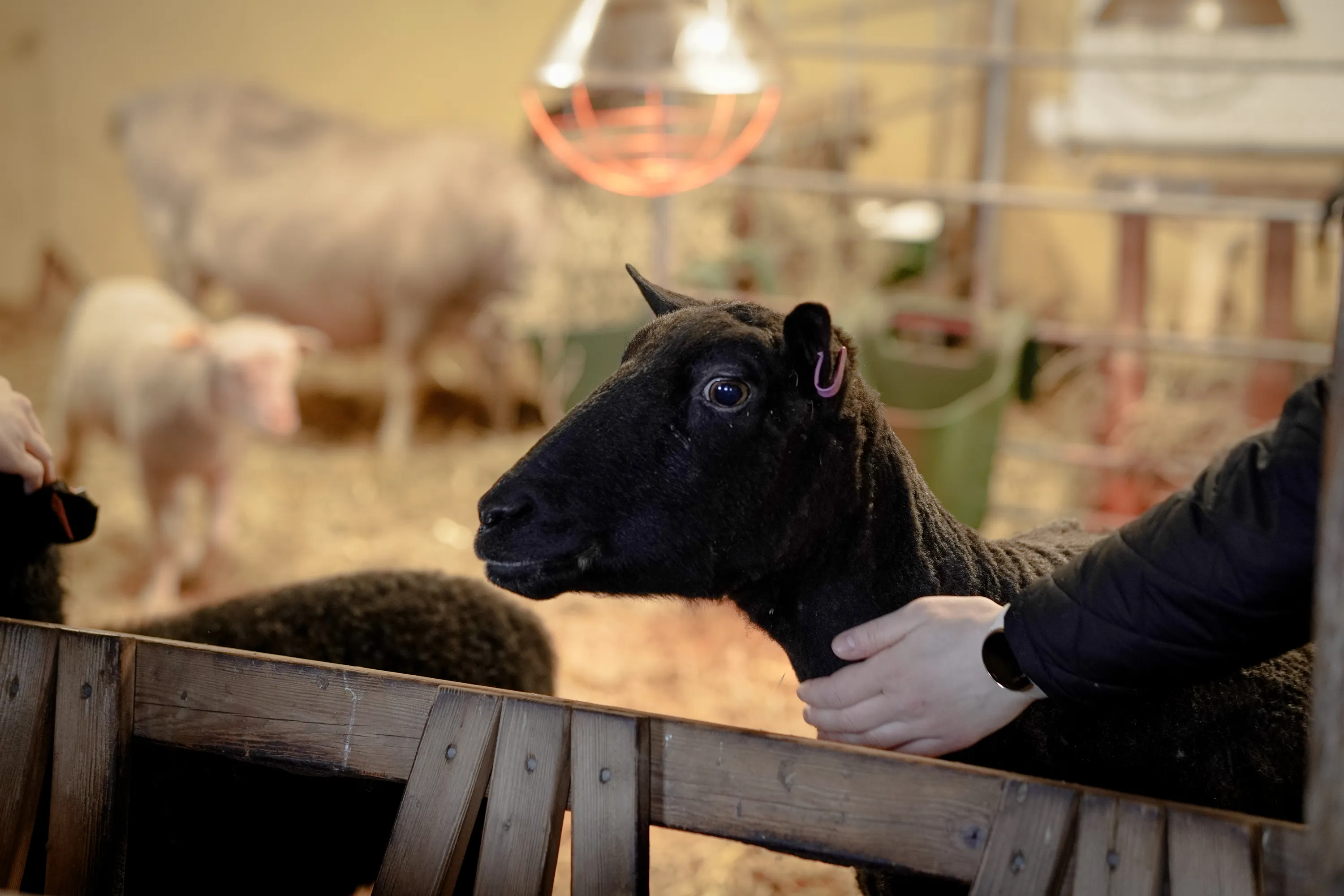
The farm's goats are Finngoats, which is the only native goat breed of Finnish origin. The breed is healthy, long-lived, and social by nature. The coloring of the Finngoat varies from white to mottled grey, though black and brown variations also occur. There are both horned and hornless Finngoats. Both the bucks and the does feature a characteristic beard.
The goats at Haltiala Farm spend time outdoors all year round. In the autumn, the Finngoat grows a thick winter coat, allowing it to stay warm even in freezing temperatures.
Doe / Nanny (Kuttu) = a female goat
Buck / Billy (Pukki) = a male goat
Wether (Rupukki) = a castrated male goat
Kid (Kili) = a goat under 6 months of age
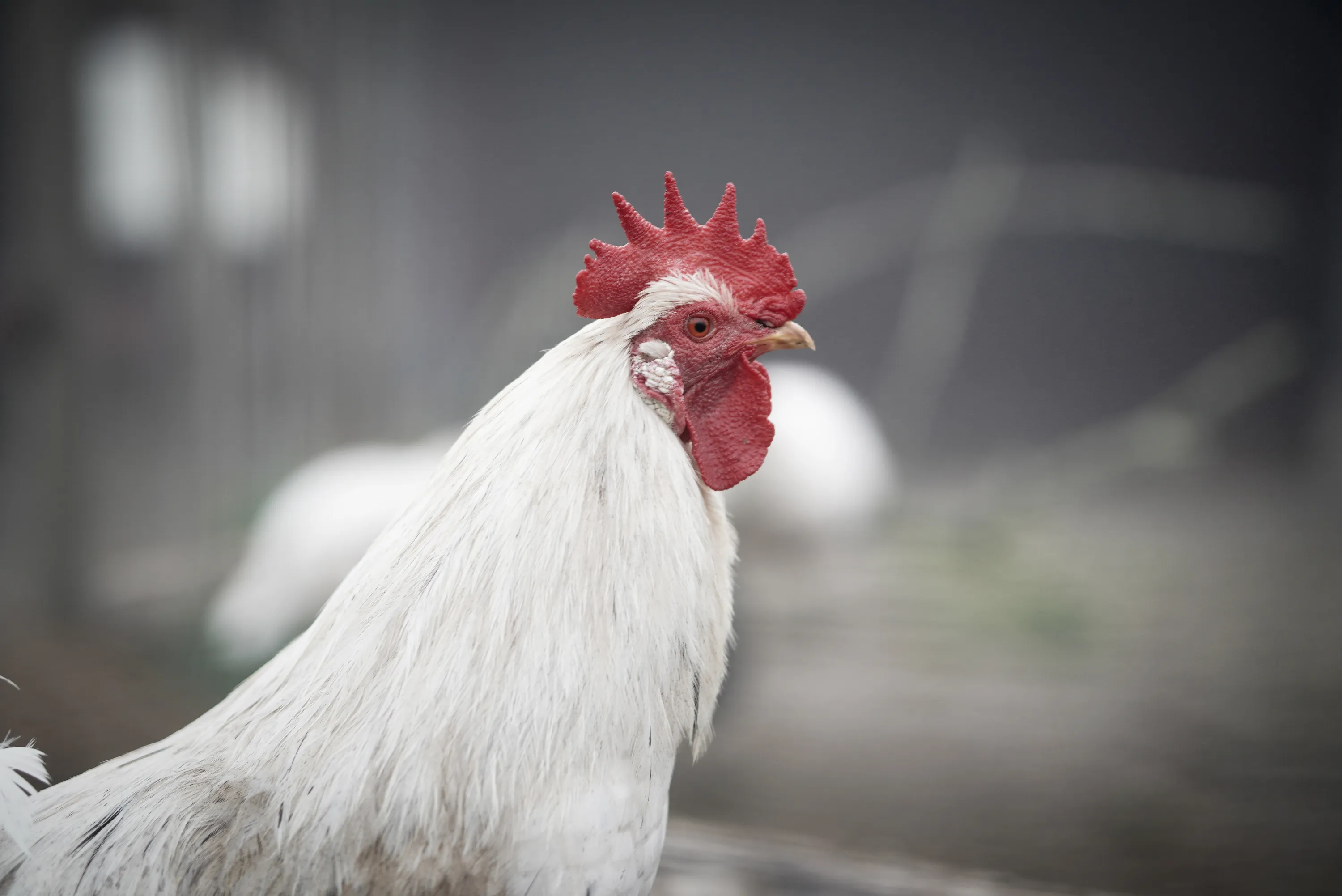
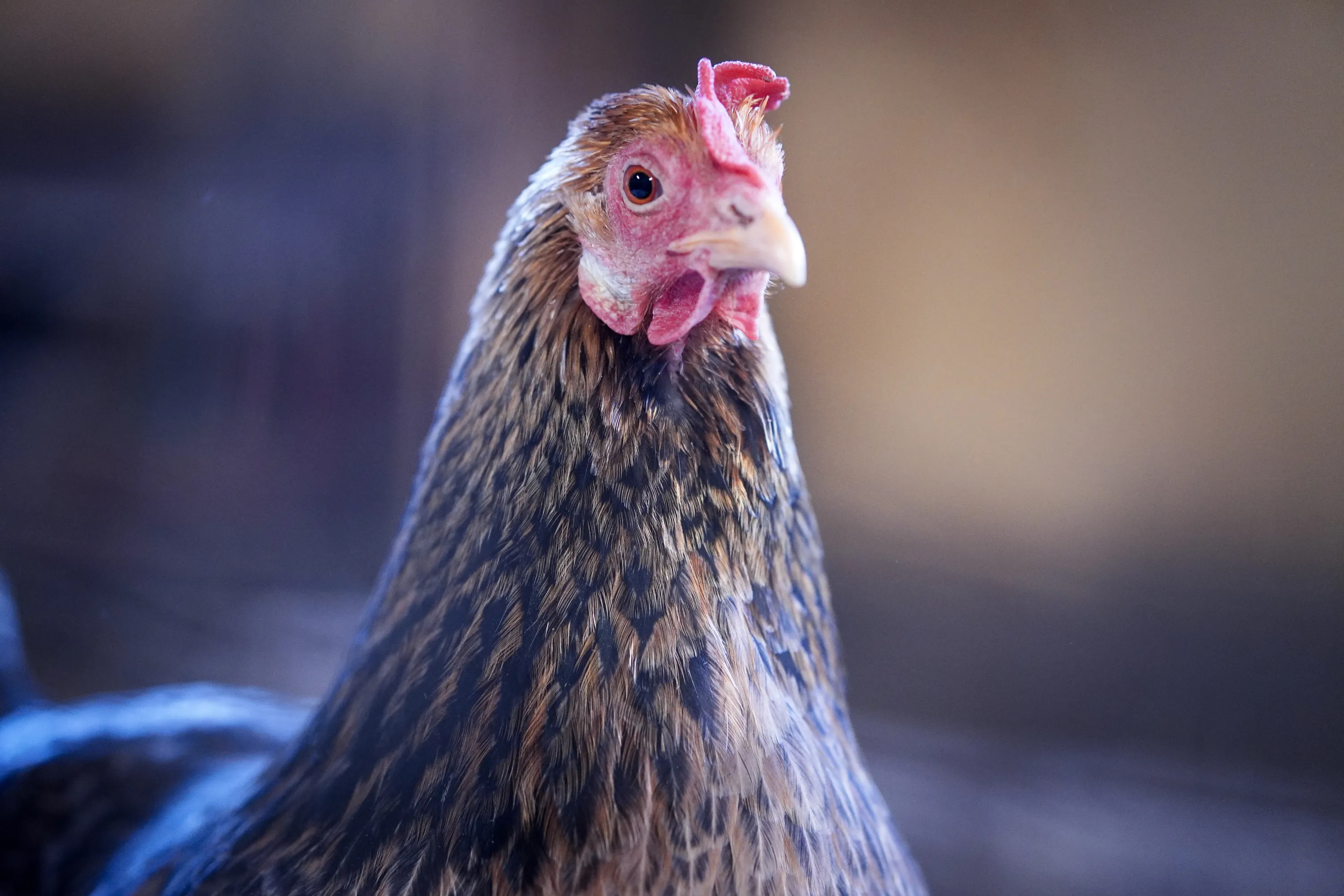
The chickens at Haltiala Farm belong to the Finnish Landrace breed. The Finnish Landrace chicken is an original, native breed that has adapted well to northern conditions. The landrace chicken is divided into distinct strains or lineages. The chickens at Haltiala belong to the Hornio strain. The appearance of the breed varies from light colors to completely black. Landrace chickens have retained many of their natural instincts, such as foraging for food, the urge to brood, and caring for their offspring. A landrace chicken can live up to 15 years. The Hornio strain is considered the most primitive of the Finnish landrace chicken strains.
At Haltiala, the chickens spend time outdoors from the beginning of June until late autumn, and spend the winter months inside the sheep barn.
During the summer, the farm also hosts pigs on loan from local home farms.
In the summer of 2026, the farm's newest animal residents will include alpacas and ponies.
Except during the deepest winter months, the goats are outside year-round, weather permitting. Weather conditions ultimately dictate the length of the grazing season and the animals' outdoor time.
Visitors' dogs are welcome on the farm grounds provided they are kept on a leash. However, dogs are not allowed near the animal pastures, other outdoor enclosures, or the feed fields.
Only animal caretakers are allowed to enter the animal pens or outdoor enclosures.
Feeding the animals is forbidden. The animals have planned diets according to which the caretakers feed them. Feeding the animals is not permitted, and they will get sick if they receive the wrong kind of food.
Animals must not be teased or harassed: any such situation will be intervened in immediately.
Animals may not always be visible, as they always have the option to retreat and rest.
Animals may be petted if they approach you on their own.
To minimize the risk of disease, please avoid contact with the animals for 48 hours after traveling abroad or visiting other animal facilities. This guideline also applies to employees.
You must behave calmly around the animals and avoid unnecessary noise.
The farm grounds must be empty between 8:00 PM and 11:00 AM, except during special opening hours. The area and animal facilities are equipped with recording camera surveillance and security guarding.
.webp)
Animals are provided with opportunities for species-specific behavior and a proper diet. Animal health is promoted, among other things, in cooperation with a veterinarian through illness prevention. The animals are cared for by animal care professionals.